In the civil case of Jane Doe v. Tulare Joint Union High School District, a former female student-athlete at Tulare Western High School alleged that the district’s systemic failures in oversight, policy enforcement, and supervision of its athletic program enabled years of grooming and sexual abuse by an assistant coach. The complaint, filed in 2022, named the school district and Assistant Coach Alec Denney as defendants. Denney, who coached girls basketball, was later arrested, charged with multiple felonies, convicted, and sentenced after a mandated report of suspected child abuse was made to law enforcement in August 2021. The underlying conduct occurred primarily during the 2019–2020 school year, when the victim was a sophomore. The district ended up having to pay out a $3,500,000 settlement to Jane Doe.
I served as an expert witness on behalf of Plaintiff Jane Doe in this matter. I reviewed thousands of pages of documents, including the complaint, the police reports, Denney’s personnel file, about a dozen depositions, the district’s Handbook for Coaches, Code of Conduct for interacting with students, and related board policies, which revealed to me a pattern of unenforced rules that created repeated opportunities for abuse.
The student-athlete victim met Coach Denney as a freshman during the 2018–19 season. Soon after meeting through the school’s basketball program, messaging began via Snapchat, progressed to regular rides home after practices, and escalated to sexual contact, including oral sex in his vehicle and later penetrative sex. Denney admitted the conduct was wrong in all respects; at the time he was approximately 24 and the student was 16.
District policies in place at the time were explicit. The Handbook for Coaches Code of Conduct required coaches to “place the safety and welfare of players as the highest priority.” It prohibited transporting students in personal vehicles after contests or practices due to the risk of personal liability. The separate Code of Conduct: Policy for Interacting with Students listed concrete examples of conduct that undermines professional adult-student interactions, including being alone with a student outside the view of others, maintaining personal contact without an educational purpose through electronic communications, transporting a student in a personal vehicle without prior authorization, and communicating through any medium designed to eliminate records of the communications. Employees were directed not to contact students on personal phones, electronic platforms, or social media. Sexual harassment was defined to include unwelcome sexual advances and verbal, visual, or physical conduct of a sexual nature. One of the fourteen recognized legal duties of an athletic administrator is to select, train, and supervise coaches to ensure they can provide safe conditions.
These policies were not theoretical. Deposition testimony and other records show they were routinely disregarded in the girls basketball program. Head Coach (name redacted) acknowledged driving players home multiple times and knowing that Assistant Coach Alec Denney did the same during the 2019–20 season. Athletic Director (name redacted) testified that he never authorized Alec Denney to transport students in a personal vehicle, never saw such rides occurring, and was unaware of permissions given to other assistants. The Athletic Director described coaches’ meetings that covered “best practices” and “dos and don’ts,” yet demonstrated limited command of specific policies governing being alone with students on or off campus, outside-of-school contact, or monitoring of communication apps. Principal (name redacted) confirmed standard hiring processes existed but indicated limited personal follow-up on the investigation concerning Alec Denney after the allegations surfaced. Evaluations of coaches were not consistently remembered or documented as having been submitted.
The result was a predictable progression.
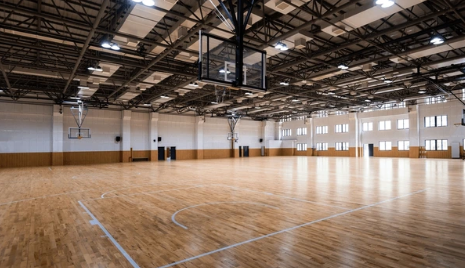
What began as team coaching in a public gym moved to private rides, Snapchat exchanges that left no durable records, physical contact, and ultimately sexual acts in the back of a private vehicle. Multiple players were sometimes present in the car for rides home, but one-on-one opportunities still occurred as the coach made sure to drop the victim off last. Head Coach (name redacted) and others observed the victim in Alec Denney’s vehicle. No effective intervention stopped the pattern over more than a year.
I formed nine expert opinions after complete review of the depositions, police report, district policies, and related materials, and grounded in professional background, training, and experience in education leadership and athletic administration, identify the district’s conduct as falling below the applicable standard of care:
1. The district failed to “place the safety and welfare of players (of students/student-athletes) as the highest priority” (as their own Handbook for Coaches Code of Conduct claims) due to a lack of institutional control of the athletic program.
2. The conduct of the district fell below the standard of care of providing a safe learning environment for its student-athletes due to a lack of oversight of their own Code of Conduct: Policy for Interacting with Students.
3. The unfortunate progression from coaching a team in a public gym to 1:1 penetrative sex in the back of a coach’s private vehicle between the victim, student-athlete Jane Doe, and Assistant Coach Alec was because of the negligence of the school district to provide a safe environment for its student-athletes.
4. The conduct of the district fell below the standard of care by allowing coaches to drive student-athletes home after practices on a district school campus, which increased the risk of harm to student-athletes.

5. The district was negligent in ensuring the safety of Jane Doe because they failed to enforce their own district policy of not driving students in private vehicles to be broken countless times in the girls basketball program over more than one year.
6. Athletic Director (name redacted) and Head Girls Basketball Coach (name redacted) should not have allowed Assistant Coach Alec Denney to be alone with any player on the basketball team. In general, coaches at the high school level in California are taught to never be alone with a player at any time. Despite this general principle and standard of care, Alec Denney routinely drove Jane Doe home, which gave him the opportunity to groom her, sexually abuse, and eventually have sex with her.
7. The district was negligent in ensuring the safety of Jane Doe because they failed to enforce their own district policy of not communicating with students via social media apps like Snapchat. From the Code of Conduct: “Employees shall not communicate with students through any medium that is designed to eliminate records of the communications.”
8. The district was negligent in ensuring the safety of Jane Doe when they failed to enforce their own sexual harassment policy.
9. One of the 14 Legal Duties of an Athletic Administrator is to “select, train and supervise coaches.” Athletic Administrators are expected to ensure coaches are capable of providing safe conditions and activities as outlined in the first thirteen duties. The district failed to supervise Alec Denney; they failed to evaluate his effectiveness on an annual basis, as is standard practice.
In sum, the sexual abuse of Jane Doe, as well as the felonies of which Denney was convicted, were foreseeable and preventable but for the conduct of Alec Denney and district personnel who failed to supervise him and take action when he routinely violated coach/student-athlete policies and procedures regarding employee/student interaction. These opinions are based on the records reviewed to date and remain subject to revision if additional documents are produced.
The case underscores a broader reality in interscholastic athletics. Written policies prohibiting private vehicle transport, ephemeral electronic contact, isolation with individual athletes, and sexualized interactions are common. Their value depends entirely on consistent training, monitoring, evaluation, and enforcement by athletic directors, head coaches, and site administrators. When institutional control is absent—when rides home become normalized, when Snapchat becomes the default channel, and when no one intervenes despite visible patterns—the risk of grooming and abuse rises sharply. California high school coaches are routinely instructed never to be alone with a player. That baseline expectation was not met here.
The civil litigation examines whether the district’s failures to implement and police its own rules constituted negligence that proximately caused harm to a student-athlete under its care. The factual record of repeated, unaddressed policy violations, combined with the clear language of the district’s own documents, forms the core of the liability analysis. Effective prevention requires more than policies on paper; it demands daily institutional control of the athletic program so that the safety and welfare of student-athletes remain, in practice as well as in print, the highest priority.
Chris Fore is a veteran Administrator, Athletic Director, and Head Football Coach from Southern California; he currently serves as a Principal. He has written four books and produced coaching manuals, available at EightLaces.org. Both schools where he served as Athletic Director set school records for championships won in a single school year; two schools he has led as a Principal have been named California Model Schools. Fore holds a Master’s in Coaching and Athletic Administration and multiple education credentials. A Certified Athletic Administrator, he served as President of the California Coaches Association (2018–2021) and has held various other leadership roles in several different organizations. A sought-after speaker, Fore has contributed to national sports publications and appeared on radio and podcasts. He also serves as an expert witness in athletic lawsuits. Follow him on X!
About the Author