As a seasoned football coach, athletic administrator, and expert witness with deep experience in high school athletics, I was retained by a school district’s attorneys in a concussion lawsuit filed by a player and his parents against his Head Football Coach. With close to twenty years of coaching experience plus more than a dozen as an Athletic Administrator, I bring a practical, on-the-field perspective to these matters in the courtroom. I hold a Master of Arts in Athletic Administration, certification as a Certified Athletic Administrator through the National Interscholastic Athletic Administrators Association, and multiple coaching certifications. I have also worked as an expert on athletic rules and regulations, including those from the California Interscholastic Federation.
We won this case, the school district and the Head Coach and his staff were cleared of any and all wrongdoing!!! It is my hope in writing this article that other district leaders, site administrators and coaches can learn something from this experience. This lawsuit cost the district tens of thousands of dollars, took approximately 10 years to go from date of injury to final court decision, and also took its toll of time and stress on the coaching staff.
In preparing my opinions, I carefully reviewed the plaintiff’s complaint, deposition transcripts, district policies/procedures, and many other relevant documents. My conclusions are straightforward: Coach Banks and his staff took player safety seriously, concussions were not a systemic issue on their 2012 football team, the student-athlete’s claims regarding a head injury in the (opponent name removed for privacy) game lack credibility, and several of the plaintiff’s expert opinions are flawed or overstated.
Player Safety Was a Priority
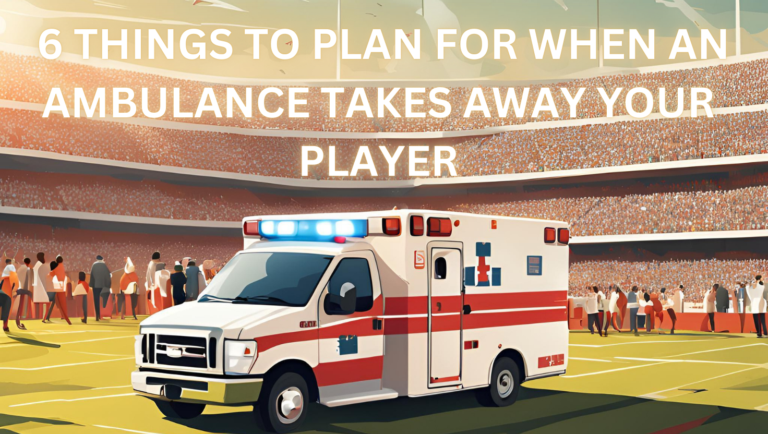
The Head Coach consistently placed safety above all else. In his deposition, he stated clearly, “My first responsibility is to put safety ahead of winning.” He emphasized that just one sign or symptom of a head injury is enough to remove a player from a game. This aligns with standard protocols. When the student-athlete complained of feeling unwell with a headache during a scrimmage, the Head Coach immediately removed him from practice and did not return him. Assistant Coaches also monitored players closely, the Head Coach also checked on Bravo when he saw him vomiting water. An ambulance was called shortly thereafter.
Deposition testimony from the player himself supports this culture. He reported that coaches never instructed players to play through injuries and confirmed no coercion occurred between the game when he was hit in the head and the subsequent contest. If a student-athlete mentioned any headache, evaluation was required, this testimony according to the Plaintiff himself. These practices demonstrate a responsible approach to concussion management, not negligence.
Concussions Were Not an Issue for the Team
The student-athlete’s own testimony undercuts claims of a broader problem. When asked if any other players on the team suffered head injuries or concussions during his time, he responded: “No, it was just me… nobody else suffered any concussions or anything like that.” This isolates his case and suggests the coaching staff managed the team’s health effectively overall.
The Alleged Concussion in a Game Lacks Credibility
The student-athlete’s account of a head injury during a game is not believable when examined closely. In his deposition, when first asked about injuries in that game, he mentioned a leg cramp rather than a head issue, a curious omission if the concussion was significant. He claimed to have told an Assistant Coach that his head hurt in the second half, but that Assistant flatly denied this, stating the student-athlete never reported any head pain. Another Assistant Coach similarly had no knowledge of any head injury at the time, he coached this player directly by position. The student-athlete did not ask to leave the game, request a trainer, or show obvious signs that would have triggered intervention.
Further evidence indicates the student-athlete may have covered up any symptoms. In a Facebook Messenger exchange with teammate (name redacted for privacy), the Plaintiff admitted, “I have a concussion but don’t tell anyone.” When asked if he was okay for the upcoming game by several different members of the coaching staff, he affirmed that he was. During the practice week following the game where he allegedly received the concussion, Bravo said his head “wasn’t bad anymore.” Notably, he sought no medical advice after the game. This pattern suggests he managed his own condition rather than reporting it fully to coaches, undermining any claim of coaching failure.
Critiquing the Plaintiff’s Experts
Plaintiff’s expert (name redacted for privacy) appears to credit the student-athlete’s testimony over that of the coaches. Having worked extensively with both adults and teenagers, one must consider reliability. Their expert also lacks deep experience in the modern “concussion era,” having only managed coaches and athletes during this period for about two years. Importantly, he agreed that if a player like the Plaintiff did not report symptoms and coaches observed nothing indicative of a concussion, there would be no trigger for protocol, this is a fair and reasonable position that aligns with real-world coaching realities.
The criticisms of a second expert for the Plaintiff also warrants scrutiny. She claimed coaches lacked knowledge of accurate helmet fitting, yet there is no national or state standard of care mandating specific training for this. Manufacturers provide suggestions, but I have unpacked hundreds of new Riddell helmets with no fitting instructions attached—a common experience even during recertification. Her specific guidance, such as ensuring “the crown of the helmet is one finger length above the eyebrow,” appears imprecise. “Length” does not make anatomical sense here; it would position the helmet too high. She likely meant width or a different measurement, highlighting potential gaps in her analysis.
Conclusion
Based on the evidence presented in this case, the Head Coach and his staff fulfilled their responsibilities regarding player safety. They removed players at the first sign of issues, maintained a culture where reporting injuries was encouraged, and responded appropriately when the Plaintiff showed symptoms at the scrimmage. The student-athlete’s failure to report clearly during the game in question, combined with his own statements minimizing the injury and instructing others not to disclose it, points to personal management of symptoms rather than coaching misconduct.
This case highlights the challenges in high school athletics: coaches must rely on honest player reporting while vigilantly monitoring for signs. Holding coaches liable when protocols were followed and symptoms were not disclosed sets a dangerous precedent. My expert opinion is clear—the evidence does not support a finding of negligence against the district, the Head Coach or the program.
Chris Fore is a veteran Administrator, Athletic Director, and Head Football Coach from Southern California; he currently serves as a Principal. He has written four books and produced coaching manuals, available at EightLaces.org. Both schools where he served as Athletic Director set school records for championships won in a single school year, and were recognized for both sportsmanship and academic excellence. Fore holds a Master’s in Coaching and Athletic Administration and multiple education credentials. A Certified Athletic Administrator, he served as President of the California Coaches Association (2018–2021) and has held various other leadership roles in several different organizations. A sought-after speaker, Fore has contributed to national sports publications and appeared on radio and podcasts. He also serves as an expert witness in athletic lawsuits. Follow him on X!
About the Author