Scroll any media in 2026, and you’ll see some type of issue regarding the use of social media by student-athletes, and many times it is student-athletes getting themselves into trouble. Some of us are old enough to remember coaching before social media existed!! Can you imagine NOT having to worry about being recorded at any time, or having cameras everywhere around you, or having to help your student-athletes navigate the use of social media?! Man, those were the days!
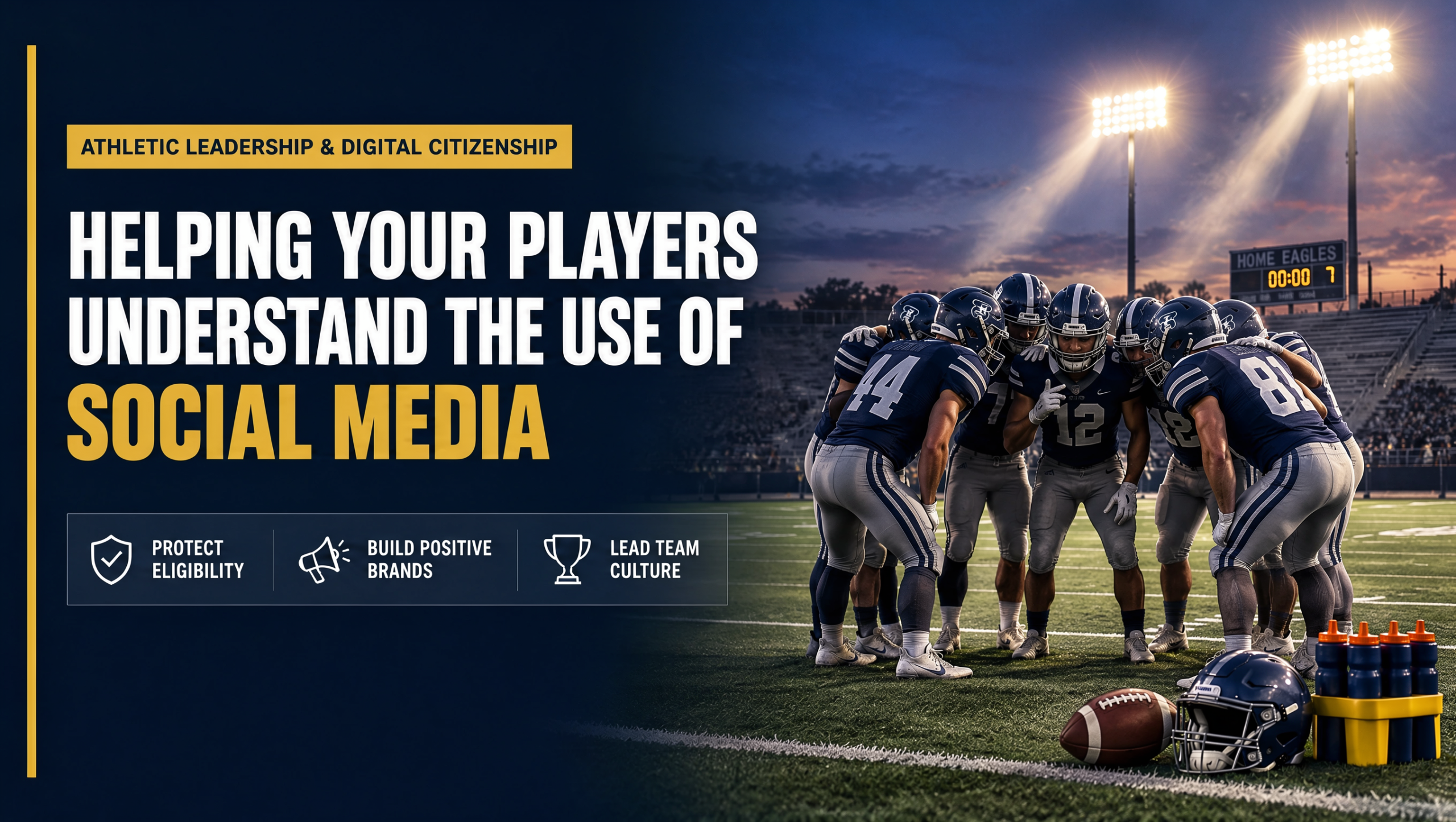
Athletic Directors and Head Coaches play a central role in teaching student-athletes how to use social media responsibly. Platforms amplify every post, and a single unwise comment can damage a player’s reputation, the team’s culture, recruiting efforts, and the school’s standing. Clear expectations, regular education, and consistent modeling help athletes represent themselves and their programs positively while protecting long-term opportunities.
Here are 8 different topics about the use of social media that you can help your players with.
1. Players about their own teammates
Athletic Directors and Head Coaches should frame social media as an extension of the locker room. Encourage athletes to celebrate teammates’ achievements, share practice highlights, and express genuine support. At the same time, set firm boundaries against public airing of internal conflicts, sarcasm that can be misread, or jokes at a teammate’s expense. Teach players that tagging teammates or posting team photos requires consent and that private disagreements stay private. Coaches can model this by publicly recognizing players for effort and character rather than only stats. When issues arise, address them face-to-face or through team channels first. A simple guideline, post only what you would say in front of the entire team and coaching staff, reduces internal team drama and strengthens team unity.
2. Players about opposing team’s players
Rivalry energy is natural, but social media makes it permanent. Athletic Directors and Head Coaches should stress sportsmanship as a core value that extends online. Discourage trash talk, mocking injuries, or personal attacks on opponents. Instead, promote posts that acknowledge strong play, congratulate opponents after a hard-fought game, or simply focus on one’s own preparation. Education sessions can review real examples of how negative comments have led to backlash, recruiting red flags, or eligibility concerns. Coaches can reinforce this by discussing opponents with respect in team settings and by praising players who demonstrate class after victories or losses. The message is straightforward: compete hard on the field, then act with maturity online.
3. Players about opposing team’s coaching staff
Public commentary about one’s own coaching staff requires particular care. Athletic Directors and Head Coaches should make clear that criticism, sarcasm, or complaints belong in private meetings, not on social media, ever. Players should understand that public posts can undermine trust, team cohesion, and the coach’s authority. Positive posts, thanking a coach for guidance or highlighting a teaching moment, are welcome when sincere. Training should cover how to seek feedback constructively and how private concerns can be raised through captains or athletic department channels. Coaches who maintain open-door policies and respond calmly to questions reduce the temptation for athletes to vent online.
4. Players about opponent coaching staff
Comments about an opposing coach should remain professional. Athletic Directors and Head Coaches can teach athletes to avoid personal criticism, accusations of unfair tactics, or inflammatory remarks. Even lighthearted jabs can escalate quickly. Instead, encourage focus on one’s own team’s preparation and performance. Reviewing league or association guidelines on sportsmanship helps athletes see that online conduct is part of the competitive environment. Coaches who model respect when discussing other programs set the tone. The goal is to keep the conversation on the game rather than individuals.
5. Players about their own community
Student-athletes represent their school and town. Athletic Directors and Head Coaches should encourage posts that highlight community support, local businesses that back the team, youth camps, or service projects. Stay away from criticizing your local fans if they fail to show up, or are not loud enough for your liking. Gratitude toward fans, families, and volunteers strengthens relationships and builds goodwill. At the same time, remind athletes to avoid complaints about facilities, attendance, or local issues that could alienate supporters. Positive storytelling, sharing what the community means to the program, creates a better public image and can aid fundraising and recruiting. Coaches can amplify these efforts by sharing team community involvement and recognizing athletes who engage constructively.
6. Players about opponent’s community
Rival towns or opposing schools often become targets for online banter, some of it fun, and some of it nasty. Athletic Directors and Head Coaches should set clear expectations that athletes will not mock another community’s facilities, traditions, or residents. Such posts rarely stay contained and can harm relationships between schools. Instead, promote messages that focus on the competition itself or simply stay silent on rival communities. Education can include discussions of how negative remarks affect younger fans and future interactions. Coaches who keep pre-game talk centered on their own team’s goals rather than the opponent’s environment help athletes carry that mindset online.
7. Players about officials
Complaints about officials are among the most common and most damaging posts. Athletic Directors and Head Coaches should establish a zero-tolerance approach to public criticism of referees, umpires, or other officials. Explain that such comments can lead to league sanctions, affect the team’s reputation, and model poor behavior for younger athletes. Teach players that disagreements with calls are handled through coaches and proper channels, not social media. Positive or neutral posts after games, focusing on effort and preparation, are preferable. Coaches who accept responsibility for game outcomes in public and address officiating privately reinforce the standard.
8. Players about Administration
Comments directed at Athletic Directors, Principals, or other Administrators should remain professional and constructive. Athletic Directors and Head Coaches should explain that public criticism can damage relationships and limit an athlete’s ability to address real concerns. Encourage players to raise issues through established channels, meetings with coaches, captains, or the athletic office, rather than posts. Positive recognition of support from administration is appropriate when genuine. Training should cover how athletic departments operate and why certain decisions are made, reducing misunderstanding. When coaches and athletic directors maintain transparent communication with teams, athletes are less likely to turn to social media for answers or complaints.
Consistent education, clear policies, and ongoing reinforcement from athletic directors and head coaches give student-athletes the tools to navigate social media successfully. By treating each category with specific guidance, programs protect athletes, strengthen team culture, and uphold the values of the school.
Chris Fore is a veteran Administrator, Athletic Director, and Head Football Coach from Southern California; he currently serves as a Principal. He has written four books and produced coaching manuals, available at EightLaces.org. Both schools where he served as Athletic Director set school records for championships won in a single school year, and were recognized for both sportsmanship and academic excellence. Fore holds a Master’s in Coaching and Athletic Administration and multiple education credentials. A Certified Athletic Administrator, he served as President of the California Coaches Association (2018–2021) and has held various other leadership roles in several different organizations. A sought-after speaker, Fore has contributed to national sports publications and appeared on radio and podcasts. He also serves as an expert witness in athletic lawsuits. Follow him on X!
About the Author